


 This page is regularly updated, please select here to view the latest version.
April 2026
AWFUL APHIDS?
A gardener's nemesis: every year, these sap sucking insects arrive in their hundreds to feed on our precious plants. And there are over 500 species occurring in the UK; some being dependent on one or two types of plant and others with more generalist tastes.
So, what is the point of them I hear you ask. Well, they may be annoying to us, but they are an important part of the ecosystem, providing a banquet for other creatures; beneficial insects such as such as ladybirds and their larvae, hoverfly and lacewing larvae, and many others. They are also eaten by a number of small birds and their young; these include blue tits, sparrows and robins
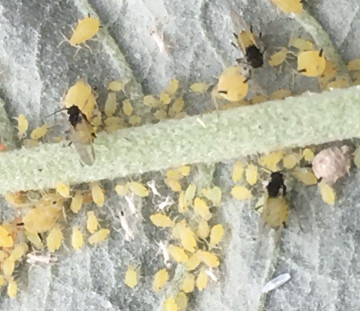
Aphids are very small insects, generally pear shaped and less than 6mm in length. Although we know them commonly as greenfly or blackfly, different species occur in a variety of colours. They all have a needle-like, flexible mouthparts known as stylets, that they use to pierce the plant material and extract the nutrient rich sap. Any sap that is excess to their needs, is excreted from their rear end as a sweet, sticky substance, called honeydew. Ants are particularly attracted to the honeydew, to the extent that they will actually 'farm' colonies of aphids. They encourage them to the most nutrient rich part of the plant, protect them from predators, and as a reward, the ant gets to milk the honeydew directly from aphid's posterior. Any honeydew that is left on the plant draws in wasps and bees to feed on it. If after all this banqueting, there is still a residue, it can encourage the growth of a fungal black sooty mould, which further damages the plant. But although the effects of an aphid infestation are rather unsightly, it rarely kills the plant
Aphids may not be everybody's favourite. 'Save the Aphid' is unlikely to garner much support, but nevertheless, they are fascinating and highly successful creatures. They reproduce at a phenomenal rate because the females that hatch from the eggs in spring can clone themselves several times over. They give birth to live nymphs, without the need to mate; a process known as parthenogenesis. And the females they lay may already be pregnant with the next generation! The young aphids (or nymphs), moult 4 times before becoming adults, and you can see their cast-off exoskeletons as white papery skins amongst the colony. Later in the season as their food source becomes depleted due to overcrowding or excessive damage, they produce winged versions of themselves called alates, which enables migration to new host plants
Later in the year, seasonal changes trigger the production of sexual females and winged males. The male flies off to find a partner to mate with, and she then lays the eggs that overwinter. The eggs are able to withstand the colder temperatures, but all the adults die off; much to the relief of farmers and gardeners no doubt! But come the spring, the eggs will hatch and the cycle begins all over again
The following photos of aphids were all taken at the Rec:
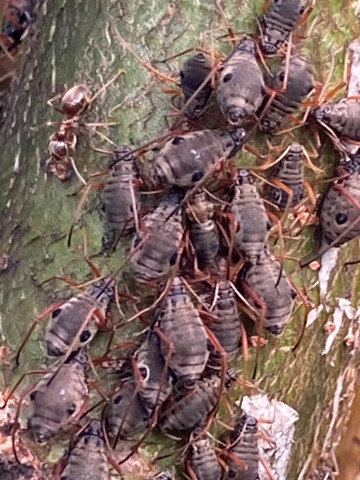
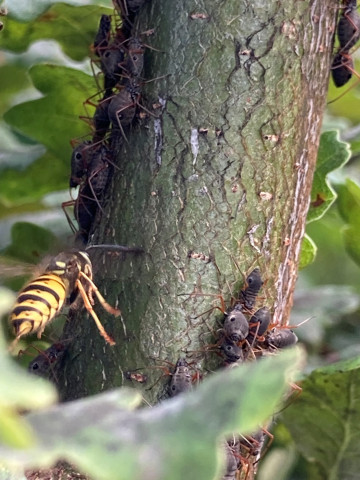
1. The Variegated Oak Aphid (Lachnus roboris) on the small Oak in the garden area 2022. You can see one of the ants that herd these aphids in one photo, and a wasp taking advantage of the residual honeydew in another.
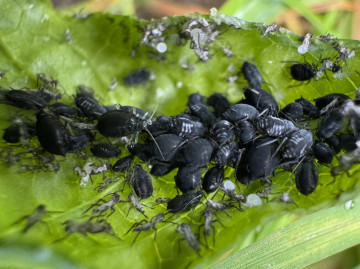
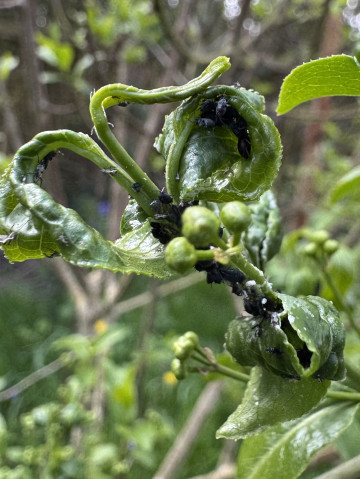
2. The Black Bean Aphid (Aphis fabae), commonly known as Blackfly. These were photographed on the Spindle in the pocket woodland, in April 2026. In one photo below you can see the smaller, paler nymphs and some cast-off skins.
 :
:
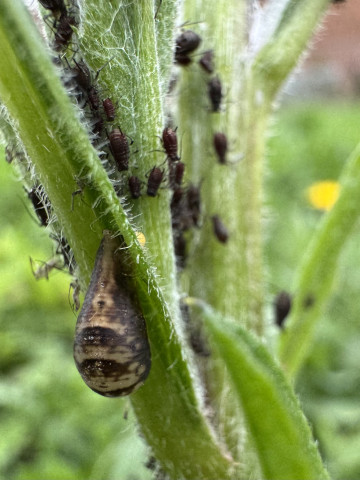
3. The Large Knapweed Aphid (Uroleucon jaceae). Found inhabiting some Greater Knapweed plants in the meadow, in April 2026. One photo below shows the pupa of a hoverfly alongside the aphids. Hoverfly larvae are voracious predators of aphids; they're the good guys, amongst others, and their larvae will be well placed for a feast once they hatch! The tube-like outgrowths on the abdomens of the aphids are called siphunculi or cornicles. They secrete a waxy substance that quickly hardens as a protection against predators. They also emit a pheromone to warn other aphids of danger
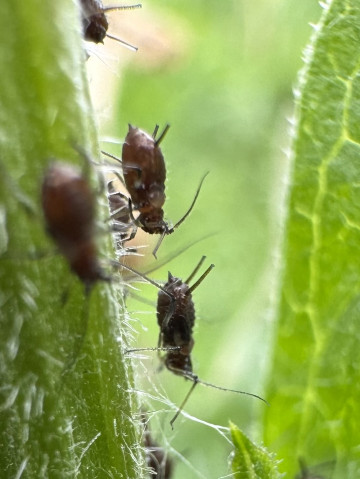 :
:
Some of many other aphids living happily at the Rec
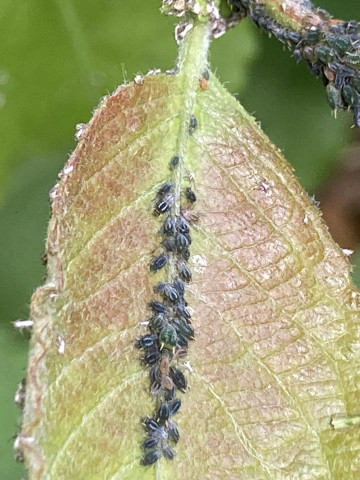
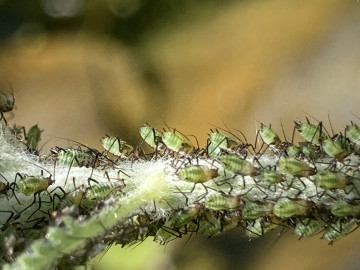
So, given that we have all these troublesome creatures, what do we do to control them? Well, the truth is, absolutely nothing! We don't have any crops to consider, and so we rely totally on nature's predators to deal with the situation and hopefully keep it within reasonable limits.
Even the RHS advocates tolerating aphids where possible. They state that aphids 'are a part of the biodiversity of gardens and a vital food source for other wildlife in your garden'. They suggest ways of controlling aphids if you feel you have to, but strongly recommend against using pesticides, because of all the environmental damage they do. So, gardeners, you have it on the highest authority, if we can't learn to love these amazing little critters...and let's face it few of us can, let's at least learn to live with them. After all, it's just another part of Nature's rich tapestry.


Friends of Portswood Rec, Southampton, UK