


 This page is regularly updated, please select here to view the latest version.
BEEing at the Rec
NATURE NOTES FROM THE REC MAY 26
The Collins dictionary definition of a bee is "an insect with a yellow and black striped body thar makes a buzzing noise as it flies. Bees make honey and can sting". I'm sure that describes what some of us think of when we hear the word "bee". But it does a huge disservice to the variety of species of this precious, beautiful insect. And, of that description, only one fact applies to all bees, namely that they can all fly!
There are over 250 types of bee in the UK, of which only about 24 are the familiar Bumblebees. The majority of species are what are known as Solitary Bees. They may live in close colonies, but unlike Bumblebees don't have a communal nest. This group includes Mining Bees, Leafcutter Bees, Mason Bees, Cuckoo Bees and many others. The Honey Bees that we now have in the UK are a non-native species, and are kept in hives. Of all the insects; many pollinators in their own right, bees are considered the most effective
When we started gardening at the Rec, it was very much with pollinators in mind. We used plants that are attractive to them, created bug hotels (for solitary bees), supplied drinking water, and made an unsuccessful attempt to create nesting sites for Bumblebees. Apparently, this is incredibly difficult to do, and when THE Bee Man, Professor Dave Goulson has extremely limited success, I guess it's not surprising that our efforts came to nothing.
But in spite of this, we're lucky to have a number of different bee species within the Rec and these are just some of the ones I managed to photograph........ but there are many more.
BUMBLEBEES are the most recognisable group as they're quite large, with their very hairy bodies and a loud buzz. They live in communal nests, usually underground, with a Queen, female workers and male drones. The nest only survives for one season and all the bees die except for the new Queen. She finds somewhere safe to overwinter and starts a new nest the following spring.
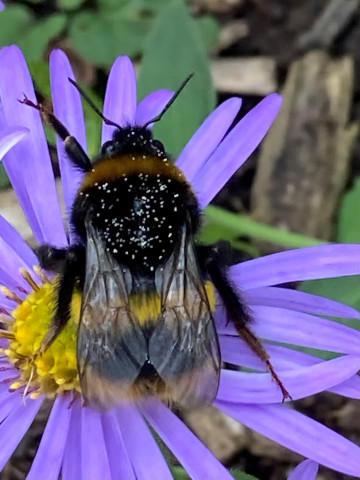
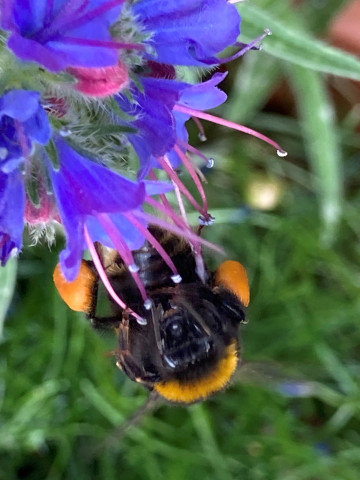
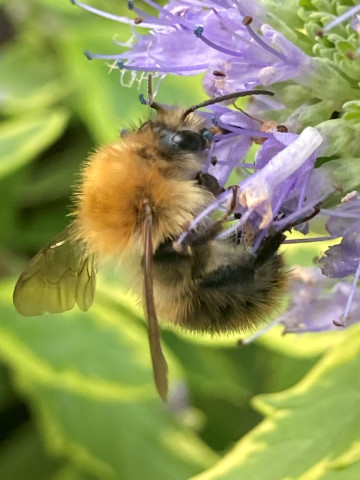
The Buff-tailed Bumblebee (Bombus terrestris) One of the largest and most common of our bumblebees, the Queen can often be seen in early spring flying close to the ground scouting for a suitable spot to create her nest. One photo above shows the pollen that inadvertently gets attached to the hairs on the body. This gets transferred from one flower to another, enabling fertilization The other photo shows the bright orange pollen sacs on the rear legs, which only occur in female bees This pollen is intentionally harvested and the colour will depend on the plant from which it's come. It will be taken back to the nest, to feed the colony.
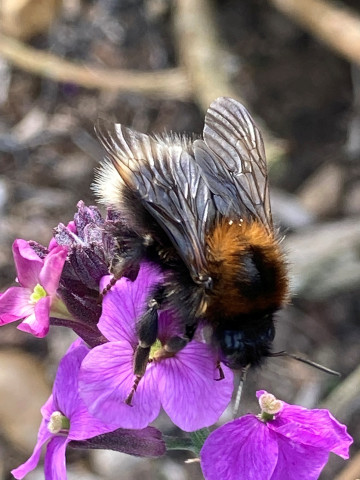
The Tree Bumblebee (Bombus hypnorum) only arrived in this country in the early 2000s, but is now widespread throughout the UK. You may see a swarm of bees outside the nest in late spring, but it's nothing to worry about, they're actually harmless. They're all males, with no sting, and they're only interested in one thing, namely emerging females!
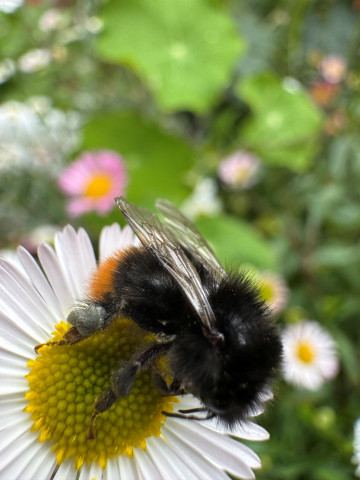
The Red-tailed Bumblebee (Bombus lapidarius). is a large and common species. It only has a medium length tongue, so feeds on more open flowers, such as the daisy here.
 :
: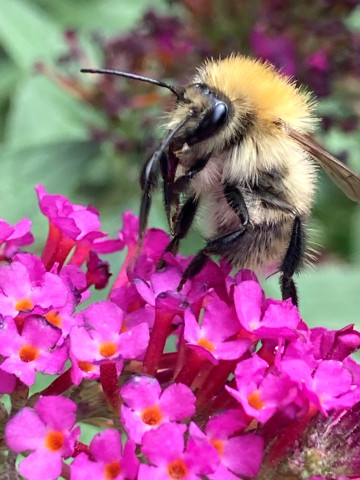
The Common Carder Bee (Bombus pascuorom). This Bumblebee is named because of its habit of combing out plant materials to make a lining for their nest, just as 'carding' was a process used in the clothing industry to prepare wool and other fibres for spinning. This is a long-tongued bee able to feed from deeper tubular flowers. (One of our previous Nature Notes focused on the Common Carder Bees.)
SOME SOLITARY BEES These are a varied group; some are Mining Bees excavating tunnels in the soil to create nests. Others such as Mason and Leafcutter Bees use crevices and cracks in wood, masonry etc and Cuckoo Bees parasitise other species, obviating the need to build nests or gather pollen. (NB There are also 6 species Of Cuckoo Bumblebee in the UK).
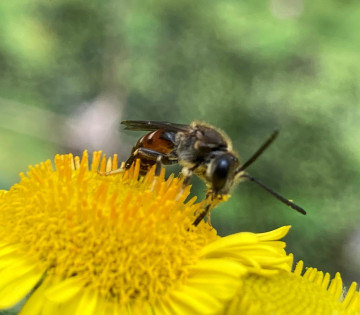
Sweat Bees (Halictidae) , are a family of small Bees that get their name from their attraction to human sweat. They harmlessly drink it, to provide the salts and minerals they need. (The one in the above photo has clearly found a less intrusive alternative!)
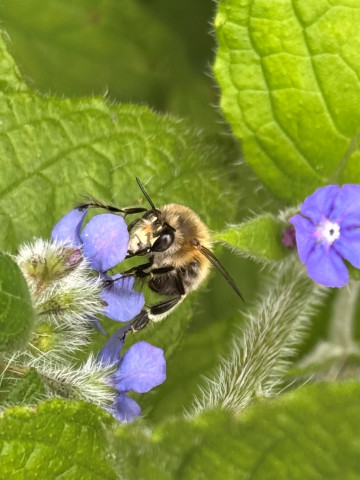
Another solitary bee is the delightfully named Hairy-footed Flower Bee (Anthophora plumipes), the photo showing a male. The female is distingusishable by being black. It's a species that can commonly be seen in the spring on one of its favourite plants, Lungwort (pulmonaria).
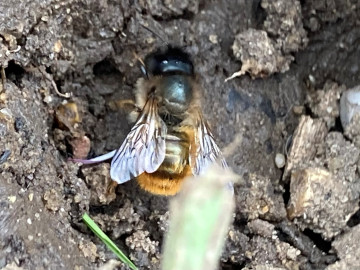
The Red Mason Bee (Osmia bicornis) This is the species that is most often attracted to our prefabricated nesting boxes. The photo shows a bee collecting wet mud to seal the chambers within the nest. (Again, one of our previous Nature Notes was dedicated to this species.)
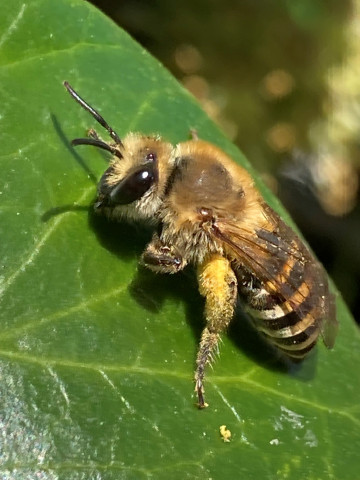
Then there's the Ivy Bee (Colletes hederae). It can be seen in large numbers around flowering ivy in the autumn and is a fairly recent arrival to the UK.
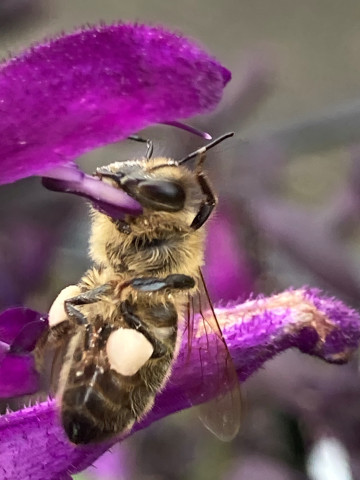
Finally, the ubiquitous Honey Bee (Apis mellifera). Beekeeping became increasingly popular during lockdown, so we now have a large population of these bees. According to the Beekeepers Association each hive averages between 35- 40,000 bees during the summer. As generalist feeders, are honey bees impacting on our native species through competition for resources and possible disease transmission. The BUMBLEBEE CONSERVATION TRUST has concerns and has produced a statement with recommendations for responsible management of honey bees, pending further research. Hopefully it will be possible to come up with the right solution for all concerned.
These are just some of the species that can be found at the Rec. and I'm so glad that we've been able to cater for these wonderfully diverse, amazing insects. If you have a garden, allotment, or even just a window box, please consider pollinator-friendly planting; you'll be well rewarded and helping our beautiful, beleaguered bees.
You may also enjoy some previous Nature Notes on and around bees in our locality, including:
Viper’s Bugloss and more Bees (focusing on solitary bees)
and Homes for bees
Words and photos on this page: Denise Long


Friends of Portswood Rec, Southampton, UK